🔹 Introduction
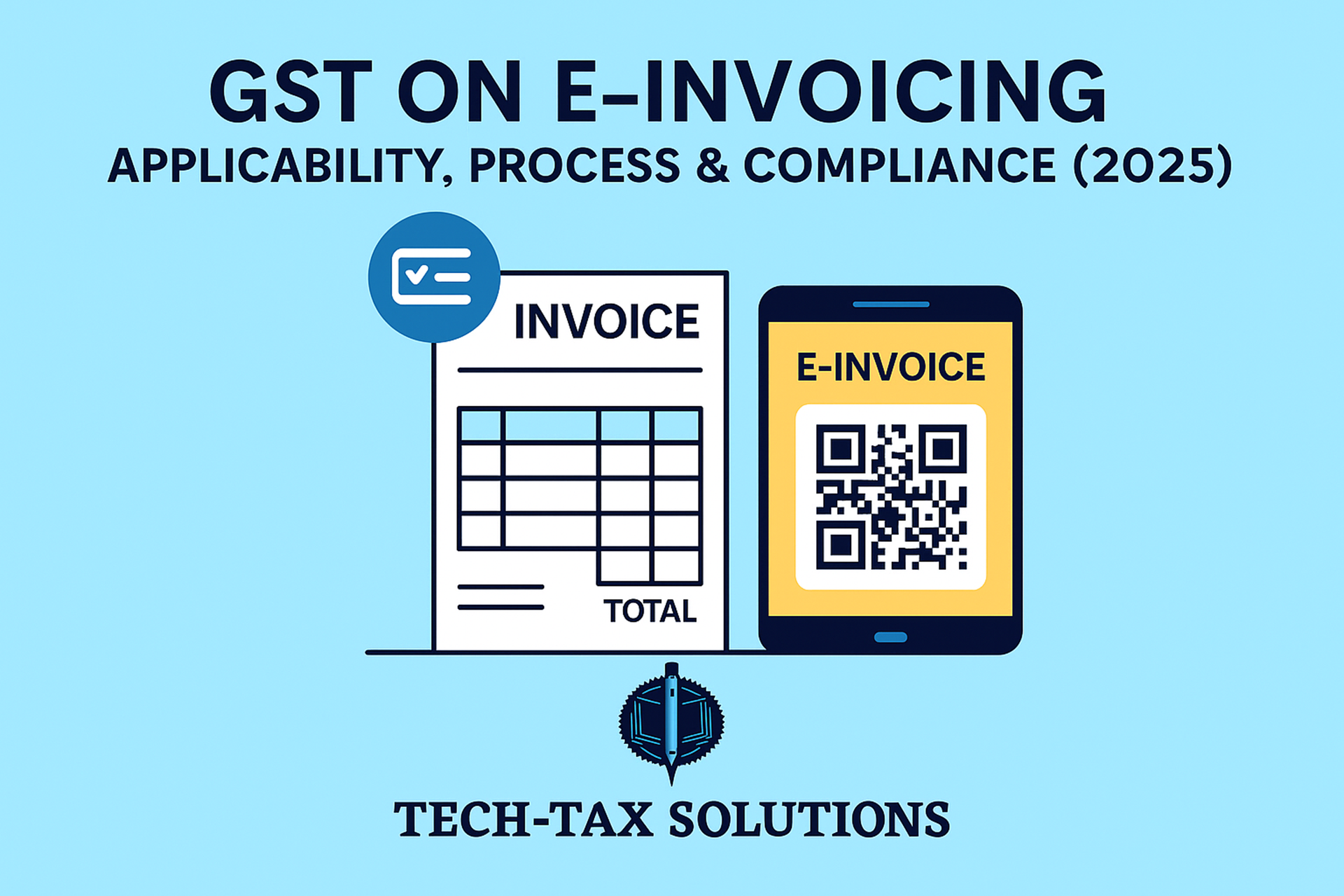
E-invoicing under GST is one of the most significant reforms in indirect tax compliance. It ensures real-time reporting of B2B invoices to the government through the Invoice Registration Portal (IRP). By FY 2025, e-invoicing has expanded to cover a much larger segment of businesses, making it essential for taxpayers to understand its applicability, process, and compliance requirements.
(Reference: Rule 48(4) of CGST Rules, Notifications 13/2020, 70/2020, 13/2021, 17/2022, 10/2023 & amendments till 2025)
🔹 Applicability of E-Invoicing
✅ Turnover Threshold
-
From 1 August 2023 – mandatory for taxpayers with aggregate turnover ≥ ₹5 crore in any FY since 2017-18.
-
Applicable to all B2B supplies, exports, and supplies to SEZ (with or without payment of tax).
❌ Exemptions
E-invoicing is not applicable to:
-
SEZ units (developers covered).
-
Banks, NBFCs, Insurance companies.
-
Goods Transport Agencies (GTA).
-
Passenger transport service providers.
-
Multiplex cinemas.
🔹 How E-Invoicing Works – Step-by-Step Process
📌 Step 1: Invoice Preparation
Generate invoice in your ERP/accounting software in the prescribed schema (JSON format).
📌 Step 2: Upload to IRP
Upload invoice JSON to the Invoice Registration Portal (IRP) via API, bulk upload, or offline tool.
📌 Step 3: IRP Validation
IRP verifies invoice details → generates Invoice Reference Number (IRN) and Signed QR Code.
📌 Step 4: Auto-Reporting
Invoice data is auto-shared with GST portal (for GSTR-1) & E-Way Bill system.
📌 Step 5: Invoice Issuance
Supplier issues invoice to buyer with IRN & QR code printed.
⚠️ Without IRN, the invoice is invalid under GST law.
🔹 Documents Covered
-
Tax Invoices.
-
Debit Notes.
-
Credit Notes.
(B2C invoices are not covered under e-invoicing.)
🔹 Non-Compliance Consequences
-
Invoice without IRN = invalid invoice.
-
Buyer cannot claim ITC.
-
Penalty: ₹10,000 per invoice (Sec. 122) + possible prosecution.
-
Department may issue notices for ITC reversal & penalty.
🔹 Practical Example
A wholesaler in Noida with turnover of ₹12 crore supplies goods to another registered dealer. He generates invoice in Tally, uploads JSON to IRP → IRN & QR code generated → invoice issued to buyer. If not uploaded to IRP, the invoice is invalid and ITC to buyer is denied.
🔹 Common Mistakes in E-Invoicing
-
Issuing invoices without IRN/QR code.
-
Uploading after issuing invoice (backdated invoices invalid).
-
Ignoring e-invoicing for debit/credit notes.
-
Not integrating ERP with IRP leading to delays.
🔹 Best Practices
-
✅ Integrate ERP/accounting software with IRP APIs.
-
✅ Train billing staff on e-invoicing process.
-
✅ Reconcile IRP invoices with GSTR-1 regularly.
-
✅ Always print/display QR code on invoice copy.
🔹 FAQs
Q1. Is e-invoicing applicable for exports?
➡️ Yes, exports are covered.
Q2. Is e-invoicing applicable for B2C invoices?
➡️ No, only B2B, exports, and SEZ supplies.
Q3. Can an e-invoice be cancelled?
➡️ Yes, within 24 hours on IRP (after that via credit note).
Q4. What happens if IRP is down?
➡️ Invoices must be generated offline and uploaded once IRP is available.
Q5. Can an exempt entity opt for voluntary e-invoicing?
➡️ Yes, if desired.
🔹 Conclusion
E-invoicing has streamlined GST compliance and improved transparency. However, non-compliance results in severe penalties and ITC denial. Businesses must integrate their accounting systems, train staff, and regularly reconcile invoices with GST returns.
📌 Need expert help with e-invoicing setup, ERP integration, or compliance audits?
Contact Tech-Tax Solutions – Quality, Trust & Expertise in Ghaziabad, Noida & Delhi.





)